






Should You Replace Your Lubricant Filling Line? Common Legacy-Line Pain Points & Complete Line Planning Guide (2026)
Executive Summary: When filling becomes inconsistent, changeovers take too long, and unplanned downtime begins to affect cost, delivery, or capacity, it is worth starting a line-replacement evaluation. An automated line can improve metering consistency, simplify changeovers, reduce dependence on experienced operators, and support a more planned maintenance approach. This guide answers the questions procurement teams and plant owners actually ask about cost, risk, and implementation.
1. What are the most common pain points in a lubricant filling line?
Lubricants are often high-viscosity products, so packaging operations commonly face inconsistent filling, material waste, leakage or contamination, and line bottlenecks. For procurement teams and plant owners, these issues can directly affect cost, quality, delivery, and customer complaints:
- Inconsistent filling → overfill increases material giveaway; underfill may create compliance and complaint risks.
- Leakage or contamination → may lead to product rejection, returns, and brand damage.
- Line bottlenecks → may limit peak-season orders and put delivery commitments under pressure.
2. What does inaccurate filling actually cost?
Legacy filling equipment that lacks regular calibration or has deteriorated over time may cause overfill or underfill, leading to material waste, rework, and quality-management costs. Filling consistency must be evaluated against the oil viscosity, fill volume, container format, equipment condition, and operating conditions. For a plant-specific loss estimate, use on-site sampling and production records rather than a general industry assumption.
3. How expensive is a slow changeover?
When every oil, fill volume, or container change requires extensive manual calibration, component changes, and restart procedures, changeovers reduce effective output and make high-mix orders harder to schedule. New lines can use product memory, quick-change tooling, and standardized procedures to reduce changeover effort and complexity. The actual improvement depends on the products and line configuration.
4. What does labor shortage really do to a filling line?
Legacy lines often depend heavily on operators who know the equipment well. When experienced staff leave or staffing is limited, the result can be operating variation, longer training time, production fluctuation, and slower troubleshooting. The value of automation is not only fewer manual tasks; it can also shift people toward material replenishment, monitoring, quality checks, and equipment management, reducing dependence on a single senior operator.
5. Repair or replace — when is it time to evaluate a new line?
The decision should not be based on equipment age alone. It should compare maintenance cost, unplanned downtime, spare-part availability, quality risk, peak-season capacity, and future product plans. A line-replacement evaluation is worth considering when:
- Critical parts are difficult to source, or repairs depend on a specific individual.
- Unplanned downtime is increasing and affecting delivery or capacity.
- The existing line cannot support new oils, fill volumes, or container formats.
- Peak-season capacity is limiting orders or product-launch timing.
A sound evaluation should use production records to compare maintenance, downtime, and capacity losses with the investment and expected benefits of a new line.
6. What does a complete lubricant filling line include?
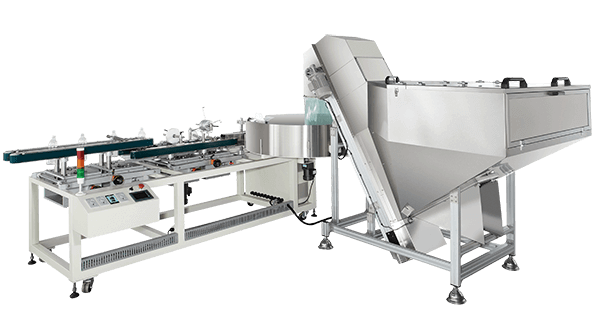
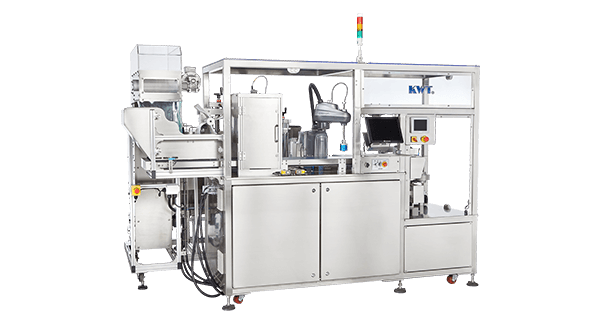
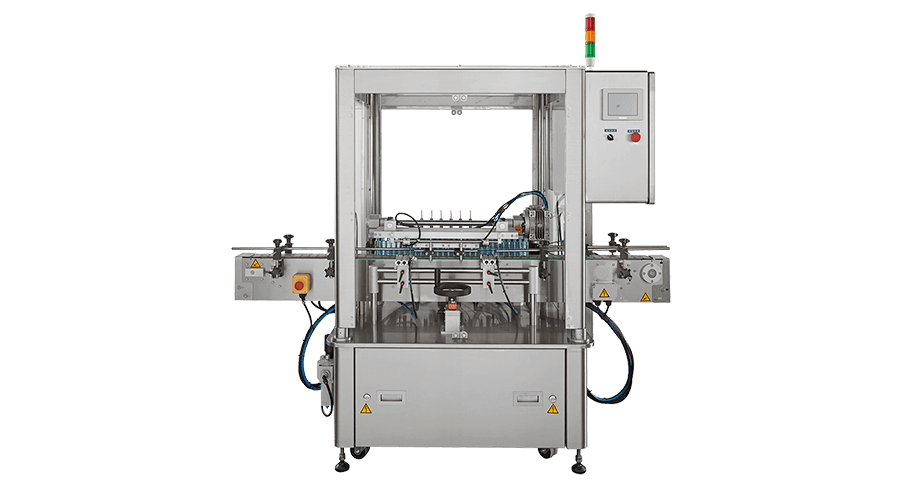
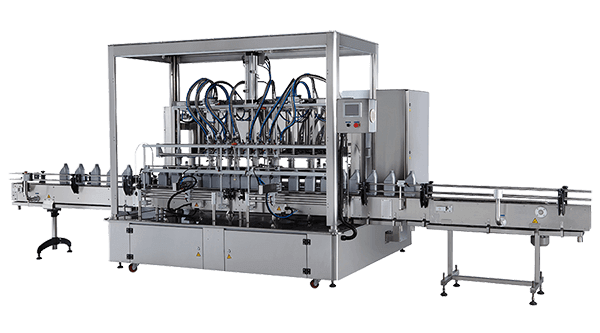
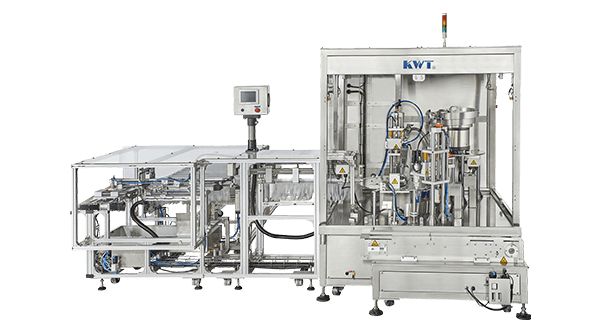
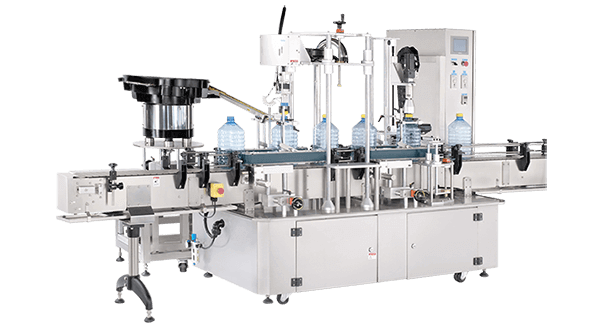
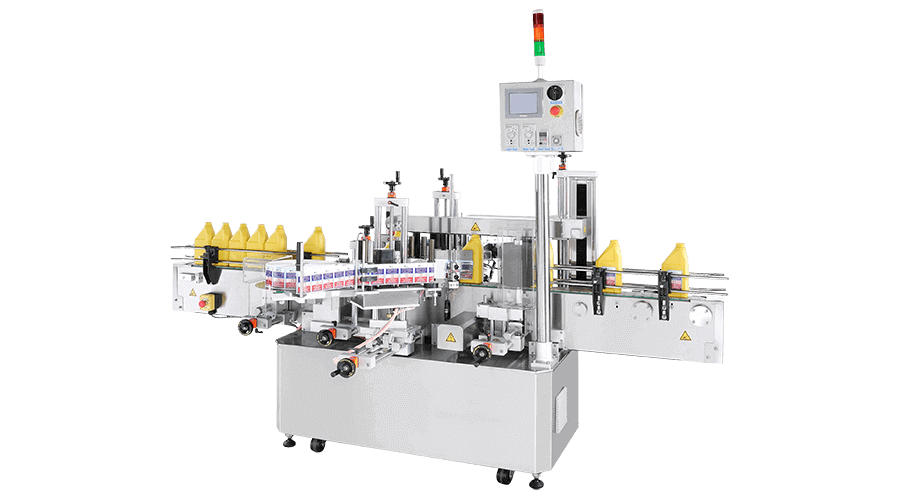
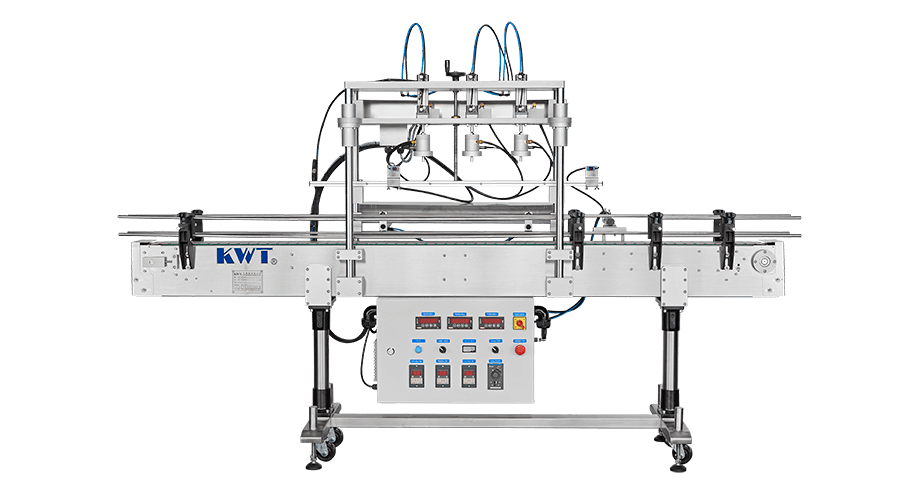
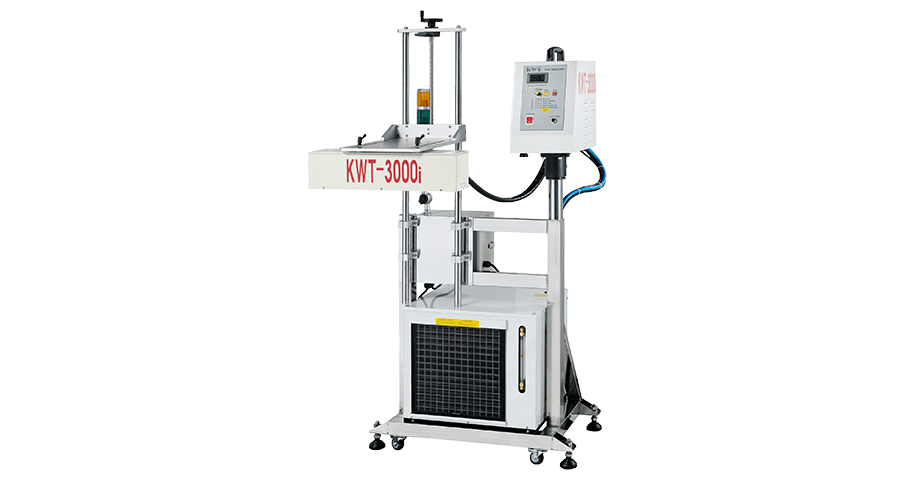
A complete lubricant packaging line may include bottle unscrambling, filling, capping, labeling and downstream packaging. The actual configuration depends on the oil properties, container sizes, fill volumes, output targets, and facility layout.
As one example, KWT’s published lubricant filling-line specifications list a fill range of 250 mL to 5 L, up to 8 nozzles, output of up to 40 bottles per minute, and 50 job memories. These are published specifications for a specific line; actual output and configuration should be confirmed for each project.
7. How long does a new line take — and how do we reduce production disruption?
A complete-line project can generally be organized into four stages:
- Assessment: confirm oil products, containers, output targets, product mix, and facility conditions.
- Line planning: define equipment, layout, interfaces, and future expansion requirements.
- Installation and validation: complete installation, testing, parameter confirmation, and operator training
- Go-live: transition based on validation results and monitor production performance.
Where site conditions allow, part of the planning and testing can be completed while the existing line remains in operation, reducing transition risk. Actual project timing depends on line scope, equipment coverage, and site readiness.
8. What after-sales support should buyers demand?
When purchasing a complete line, buyers should confirm not only the equipment specification but also the supplier’s support scope:
- On-site installation and commissioning for the new line.
- Remote diagnostics, operating support, and operator training.
- Spare-parts and consumables supply arrangements.
- Preventive-maintenance guidance and troubleshooting support.
- For overseas projects, whether engineers can be dispatched for installation or service.
KWT’s published after-sales service information lists on-site installation, production support, operator training, operating assistance, and preventive-maintenance guidance. The actual scope should be confirmed for each project and service arrangement.
Legacy vs. New-Line Evaluation Criteria
- Filling consistency: review fill variation, calibration frequency, and quality deviations.
- Changeover flexibility: review the time and labor required for different oils, volumes, and container formats.
- Labor dependence: assess whether production relies too heavily on a specific senior operator.
- Downtime risk: review unplanned downtime, spare-part availability, and service response time.
- Capacity flexibility: assess peak-season demand, product expansion, and future scalability.
Why KWT?
KWT is not a high-volume, low-price standard-machine supplier. We engineer customized complete lines around product mix, output targets, and facility conditions, supported by on-site and remote after-sales service. KWT’s published company history records that its manufacturing and sales of lubricant filling-line units in the Middle East surpassed 100 units in 2013, and that it received a P&G order in 2005. If you are evaluating a line replacement or a new installation, send us your product mix, container specifications, and output requirements. We will propose a line configuration tailored to your project.